Ashok Leyland Saathi Loading Capacity — 1120 Kg Payload & Complete Specs
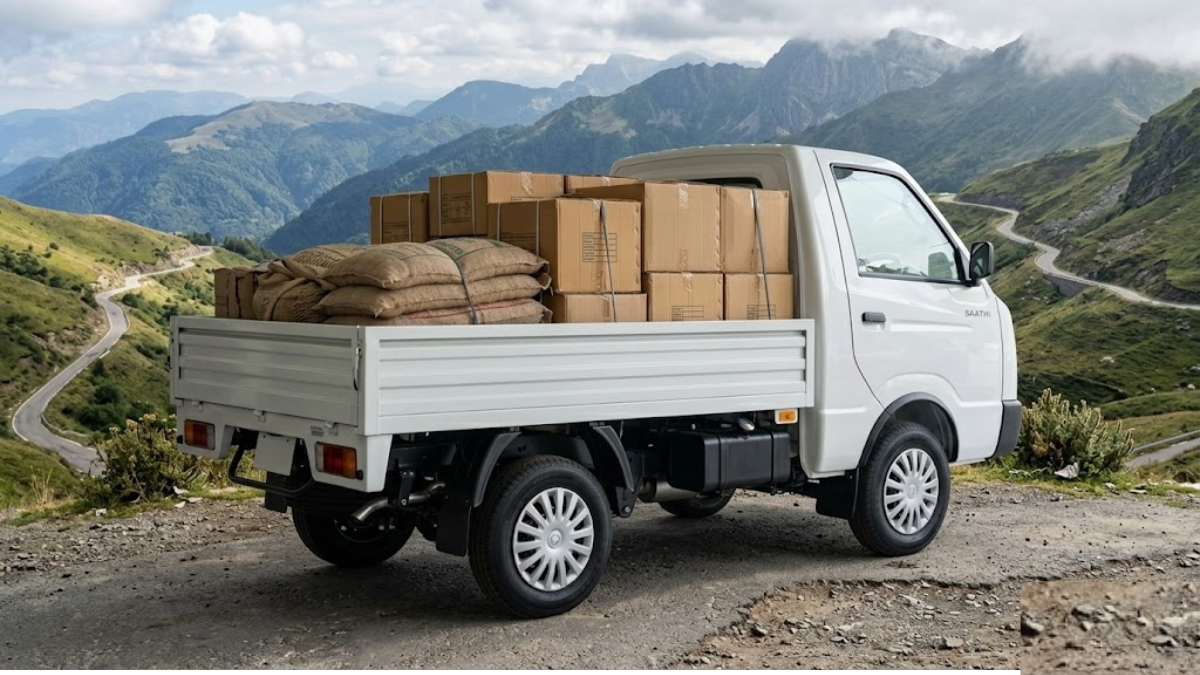
The Ashok Leyland Saathi has a loading capacity of 1120 kg (rated payload) with a Gross Vehicle Weight (GVW) of 2460 kg. The cargo body measures 8 feet 2 inches × 5 feet 3 inches × 1 foot 6 inches — one of the largest in the SCV segment. Whether you're hauling FMCG cartons, agricultural produce, building materials, or e-commerce parcels, the Saathi offers serious carrying capability for its class.
In this guide, we break down exactly what you can carry, how many bags/crates fit in the body, the complete specifications table, and how the Saathi compares to the Tata Intra V10 on payload. Let's get into the numbers.
📦 Saathi Loading Capacity Summary:
⚖️ Rated Payload: 1120 kg
🚛 GVW (Gross Vehicle Weight): 2460 kg
📐 Body Size: 8'2" × 5'3" × 1'6" (L × W × H)
📊 Cargo Volume: ~64 cubic feet
🔧 Kerb Weight: ~1340 kg
🏋️ Max Practical Load: 1200 kg (tested)
Advertisement
Payload & GVW Details
Understanding the weight specifications is crucial for maximizing load without risking overload penalties or warranty void:
| Gross Vehicle Weight (GVW) | 2460 kg |
| Kerb Weight (empty vehicle) | ~1340 kg |
| Rated Payload | 1120 kg |
| Practical Max Load (tested) | 1200 kg |
| Payload-to-GVW Ratio | 45.5% (Excellent) |
The 45.5% payload-to-GVW ratio means nearly half the vehicle's total weight capacity is dedicated to carrying goods. This is competitive in the SCV segment and allows you to carry meaningful loads while keeping the vehicle within legal limits.
Body Dimensions — Cargo Area Size
The Saathi's flat-bed body provides generous cargo space:
| Body Length (internal) | 8 ft 2 in (2490 mm) |
| Body Width (internal) | 5 ft 3 in (1600 mm) |
| Body Height / Side Wall | 1 ft 6 in (457 mm) |
| Floor Area | 43 sq ft (3.98 sq m) |
| Cargo Volume (with side walls) | ~64 cu ft (1.82 cu m) |
| Extended Height (with cage body) | 5 ft total (optional) |
The 8'2" length accommodates standard pallets and long items easily. The 5'3" width allows two rows of standard cartons side-by-side. With the optional cage/container body (5 ft height), the cargo volume increases to approximately 215 cubic feet — ideal for lightweight but voluminous goods like parcels and packaged items.
What Can You Carry? — Real Examples
Here's a practical guide to what fits in the Saathi:
| 50 Kg Cement Bags | 22 bags (1100 kg) |
| 20 Kg Rice/Wheat Bags | 55 bags (1100 kg) |
| Vegetable Crates (20 kg each) | 48-50 crates (960-1000 kg) |
| FMCG Cartons (15 kg each) | 70-75 cartons (1050-1125 kg) |
| Water Bottles (20L cans) | 50-55 cans (1000-1100 kg) |
| E-commerce Parcels (avg 5 kg) | 150-200 parcels (light load) |
| Sand/Gravel (per trip) | ~1000 kg (volume limited) |
For dense materials like cement or sand, you'll hit the weight limit before filling the body. For lightweight goods like parcels or packaged snacks, you'll fill the body volume before reaching the weight limit. The cage body option is recommended for voluminous cargo to maximize each trip.
Cargo Volume Calculation
Let's calculate the exact usable volume:
📐 Volume Calculation:
Standard Body: 2490mm × 1600mm × 457mm = 1.82 cubic meters (~64 cu ft)
With Cage Body (5ft): 2490mm × 1600mm × 1524mm = 6.07 cubic meters (~215 cu ft)
💡 Cage body triples your volume for lightweight cargo!
For businesses carrying lightweight but bulky items (e-commerce, FMCG, garments, packaged food), the cage body is a must-have upgrade. It costs approximately ₹15,000-25,000 extra and pays for itself within the first week of operations by allowing more parcels per trip.
Complete Specifications Table
Every technical detail of the Ashok Leyland Saathi:
Engine & Performance:
| Engine Type | 3-Cylinder Diesel, BS6 Phase 2 |
| Displacement | 1478 cc |
| Max Power | 45 HP @ 3400 RPM |
| Max Torque | 110 Nm @ 1400-2400 RPM |
| Emission Standard | BS6 Phase 2 (NO Urea) |
| Fuel System | Common Rail Direct Injection |
| Cooling | Water-Cooled |
Transmission & Drivetrain:
| Gearbox | 5-Speed Manual |
| Clutch | Single Plate Dry, 215 mm |
| Drive Type | Rear Wheel Drive (RWD) |
| Steering | Manual Rack & Pinion |
| Turning Radius | 4.55 meters |
Brakes & Suspension:
| Front Brakes | Hydraulic Drum |
| Rear Brakes | Hydraulic Drum |
| Front Suspension | Independent, Semi-Elliptic Leaf Spring |
| Rear Suspension | Semi-Elliptic Leaf Spring with Shock Absorbers |
| Parking Brake | Mechanical, Rear Wheels |
Tyres & Dimensions:
| Tyre Size | 155/80 R14 (14-inch) |
| Tyre Type | Tubeless Radial |
| Overall Length | 4530 mm |
| Overall Width | 1680 mm |
| Wheelbase | 2350 mm |
| Ground Clearance | 180 mm |
Electrical & Fuel:
| Battery | 12V, 60 Ah |
| Alternator | 12V, 60A |
| Fuel Tank Capacity | 40 litres |
| Mileage (ARAI) | 27.5 KMPL |
| Real-World Mileage (loaded) | 22-25 KMPL |
Advertisement
Saathi vs Tata Intra V10 — Payload Comparison
How does the Saathi's loading capacity compare to its main rival?
| Parameter | Saathi vs Intra V10 |
| Rated Payload | 1120 kg vs 1100 kg ✅ |
| GVW | 2460 kg vs 2430 kg |
| Body Length | 8'2" vs 7'10" |
| Body Width | 5'3" vs 5'1" |
| Cargo Volume | 64 cu ft vs 58 cu ft ✅ |
| Mileage with Load | 23 vs 18 KMPL ✅ |
| Winner | Saathi (more payload + volume) |
The Saathi wins on both payload (20 kg more) and cargo volume (10% more space). Combined with its superior mileage (23 vs 18 KMPL), the Saathi carries more goods at lower cost per trip. The Intra V10's only advantage is a slightly more powerful engine (40 HP vs Saathi's 45 HP — wait, Saathi wins here too!).
Recommended Accessories for Truck Owners
Essential accessories to improve safety, comfort, and efficiency on long hauls:

Dylect 4K Dash Cam — Dual Channel with Sony STARVIS 2
4K front + 1080p rear recording, ADAS safety alerts, GPS tracking, Wi-Fi, night vision. Essential for insurance claims & driver monitoring.
₹5,000 - ₹8,000
🛒 Buy on Amazon
Eliane Steering Wheel Power Knob — 360° Rotation Spinner
Non-slip ABS grip, 360° steering booster. Makes U-turns and parking effortless. Reduces driver fatigue on long hauls. Perfect for non-power steering trucks.
₹200 - ₹500
🛒 Buy on Amazon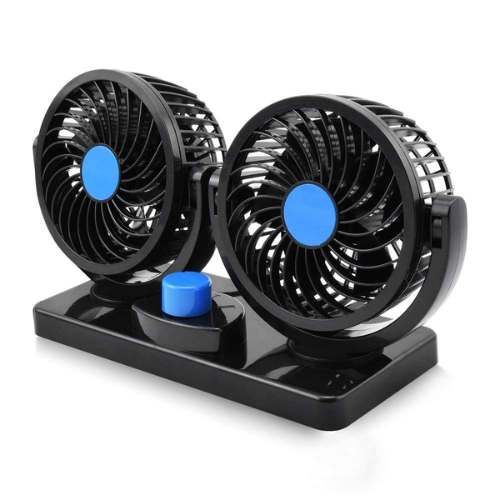
Woschmann 12V DC Double Head Fan — 360° Rotatable
Dual fan heads, 2-speed control, 360° rotation. Keeps cabin cool in non-AC trucks during summer. Direct 12V connection from battery.
₹600 - ₹1,200
🛒 Buy on AmazonAffiliate Disclosure: We may earn a small commission if you purchase through these links at no extra cost to you.
Related: Complete Saathi Review
Want the full picture — price, mileage, pros & cons, and owner experience? Read our detailed review:
📋 Ashok Leyland Saathi — Price ₹6.5L, Mileage 23 KMPL & Full Review
Read Complete Review →Must-Have Truck Accessories — Boost Safety & Comfort
Every commercial vehicle owner needs these — protect your investment and stay safe:
Frequently Asked Questions
What is the loading capacity of Ashok Leyland Saathi?
The Ashok Leyland Saathi has a rated loading capacity of 1120 kg with a GVW of 2460 kg. In practice, owners load up to 1200 kg safely. The body dimensions are 8'2" × 5'3" × 1'6" with approximately 64 cubic feet of cargo volume.
What is the body size of Saathi?
Saathi body dimensions are 8 feet 2 inches (length) × 5 feet 3 inches (width) × 1 foot 6 inches (side wall height). This provides 43 sq ft of floor area and 64 cu ft of cargo volume. With optional cage body, volume increases to 215 cu ft.
How many cement bags can Saathi carry?
The Saathi can carry 22 bags of 50 kg cement (1100 kg total) within its rated payload. The 8'2" body length and 5'3" width comfortably accommodates 22 bags arranged in 4-5 rows without stacking issues.
What is the GVW of Ashok Leyland Saathi?
The GVW (Gross Vehicle Weight) of Ashok Leyland Saathi is 2460 kg. This includes the vehicle's kerb weight (~1340 kg) plus the rated payload (1120 kg). Staying within GVW ensures legal compliance and preserves warranty.
Saathi vs Intra V10 — which has more loading capacity?
Saathi has slightly more payload — 1120 kg vs 1100 kg for Intra V10. Body size is also larger: Saathi 8'2" vs Intra 7'10" length. Combined with better mileage (23 vs 18 KMPL), Saathi carries more at lower per-trip cost.
Advertisement
Written by Rajiv Sah
Founder, OnRoadCost & Josh Riders | info@onroadcost.com