Best Water Pumps for Caravan & RV India — 12V Diaphragm + 110V Booster (2026)
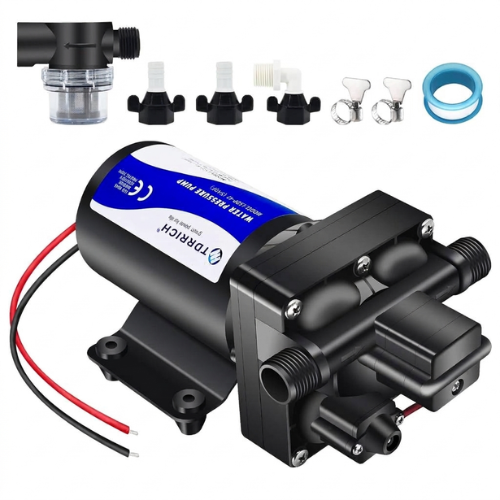
Your caravan has a ₹2 lakh battery system, ₹1.5 lakh solar panels, a gorgeous kitchen, and a comfortable bed. You open the tap to brush your teeth and... nothing comes out. Or worse — a pathetic trickle that takes 30 seconds to fill a glass.
Here's what most first-time caravan builders don't understand: your water pump is the heart of your entire water system. Without a quality pump, your ₹50,000 water tank is just a useless plastic box sitting under the caravan. The pump is what creates pressure, what pushes water through 10+ metres of piping, what gives you a shower that actually feels like a shower — not a sad drizzle.
And here's the worst part: cheap pumps fail within months on Indian roads. The vibration from potholes, speed breakers, and rough terrain destroys piston-style pumps. The diaphragm cracks. The motor burns out. The pressure switch jams. And you're stranded with a full water tank but zero water flow — which is worse than having no tank at all, because you THOUGHT you were prepared.
Disclosure: This article contains affiliate links. If you purchase through our links, we may earn a small commission at no extra cost to you.
Advertisement
Why Cheap Water Pumps Are the #1 Caravan Failure Point
We've spoken to dozens of caravan owners and builders across India. The water pump is consistently the component that fails first. Here's why:
- Vibration kills piston pumps: Indian roads are brutal. Speed breakers, potholes, unpaved sections — the constant jarring loosens piston connections and cracks internal seals. Diaphragm pumps absorb vibration; piston pumps don't. Within 3-6 months of regular travel, a cheap piston pump is dead.
- No self-priming = dead system: Your water tank sits BELOW the pump (under the caravan floor). A pump without self-priming ability cannot suck water upward. You'd need to manually pour water into the pump to "prime" it every single time. Imagine doing that at 6 AM before your morning tea. Self-priming is non-negotiable.
- No pressure switch = wasted battery: Cheap pumps run continuously once powered on. Even when all taps are closed. This drains your caravan battery overnight. A proper pressure switch detects when taps close (pressure builds up) and automatically shuts the pump off. Opens a tap? Pump detects pressure drop and starts instantly. No manual switching ever.
- Pulsating flow: Cheap pumps deliver water in pulses — surge, nothing, surge, nothing. Showering under pulsating flow is miserable. Washing dishes becomes frustrating. A quality 3-chamber diaphragm pump delivers smooth, consistent flow.
- Noise: Budget pumps sound like a small engine running inside your caravan. At night, when someone uses the tap, the entire vehicle shakes and vibrates. Your family wakes up. Quality pumps operate at whisper levels — 40-50dB vs 70+dB from cheap alternatives.
- No strainer = pump blockage: Water tanks develop sediment, especially in India where fill water quality varies. Without an inlet strainer, debris enters the pump, jams the diaphragm, and causes permanent damage within weeks.
💡 The Real Cost of a Cheap Pump:
• Cheap pump: ₹1,500-3,000 → fails in 3-6 months → no water on trips → family frustrated → ₹500+ on replacement every 6 months + labour
• Quality 12V diaphragm pump: ₹4,000-7,000 → lasts 3-5+ years → reliable water every trip → family happy → zero maintenance cost
The "expensive" pump saves you money AND saves your caravan trips from disaster.
GPM and PSI — What Do They Actually Mean?
Every water pump lists GPM and PSI. Here's what these numbers mean in real, practical caravan terms:
- GPM (Gallons Per Minute): This is FLOW RATE — how much water the pump can deliver per minute. Think of it as the "volume" of water. A 3.0 GPM pump delivers about 11.4 litres per minute. For reference: a comfortable shower needs 2.0-2.5 GPM. A kitchen tap needs 0.5-1.0 GPM. With 3.0 GPM, you can run a shower AND a kitchen tap simultaneously without pressure drop.
- PSI (Pounds per Square Inch): This is PRESSURE — how hard the pump pushes water through pipes. Think of it as the "force" behind the water. More PSI = water reaches further through longer pipe runs and reaches higher fixtures. 50 PSI is equivalent to municipal water pressure in most Indian cities. At 50 PSI, water sprays forcefully from the showerhead — not a weak dribble.
🎯 What You Need for a Caravan:
• Minimum GPM: 2.5 GPM for single outlet use, 3.0+ GPM for multiple simultaneous outlets
• Minimum PSI: 40 PSI for short pipe runs, 50+ PSI if your plumbing has multiple bends or runs over 5 metres
• Sweet spot: 3.0 GPM + 50 PSI = home-like water experience in your caravan
Essential Caravan Equipment — Must Have
Critical components for any caravan build or upgrade:

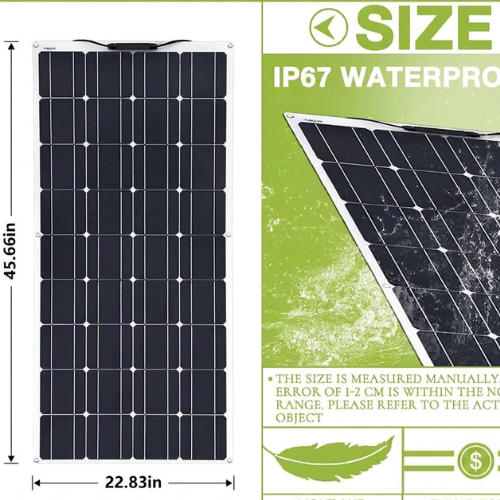
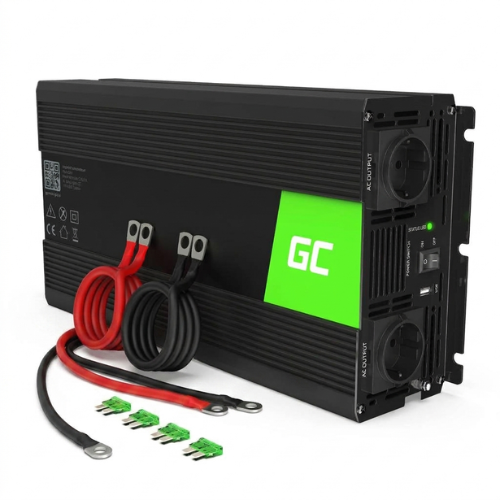
#1 — 12V 3.0GPM 50PSI RV Diaphragm Water Pump (Best for Battery-Powered Caravans)
This is the pump that belongs in every caravan running on battery power. Whether you're off-grid in the mountains, parked at a campsite, or driving between destinations — this pump delivers reliable, consistent water pressure directly from your 12V battery system. No inverter needed. No shore power required. Just connect to your battery and forget about it.
Why this specific pump solves every Indian caravan water problem:
- 12V DC = runs directly from caravan battery: No inverter means no power conversion losses. Your solar panels charge the battery, the battery runs the pump. Simple, efficient, reliable. Works while driving (alternator charging) or parked (solar/battery).
- 3.0 GPM flow rate: Enough for a comfortable shower (2.0 GPM) PLUS a running kitchen tap (0.8 GPM) at the same time. Your wife can wash dishes while your child showers — no fight for water pressure.
- 50 PSI pressure: Municipal-level pressure. Water blasts from the showerhead, fills pots fast, makes the kitchen spray nozzle actually useful. Even through 10+ metres of piping with multiple bends, you'll still feel strong pressure at every outlet.
- Self-priming: The pump sucks water from a tank mounted BELOW it. Critical for caravans where the freshwater tank sits under the floor (lowest point for weight distribution). You never need to manually fill or prime the pump — just turn on a tap and water flows.
- Built-in pressure switch (automatic on/off): Open a tap → pump detects pressure drop → turns on instantly. Close the tap → pressure builds → pump shuts off automatically. No manual switching. No wasted battery running the pump 24/7. This alone saves 2-3 Ah per day of battery life.
- Strainer included: Filters sediment, sand, and debris from your tank water before it enters the pump. In India, where you'll fill from varied sources (borewell, municipal, river filtered), this prevents pump damage and extends life by years.
- Diaphragm design: The flexible diaphragm absorbs road vibrations instead of cracking from them. This is THE technology for mobile applications. Piston pumps are for stationary homes. Diaphragm pumps are for vehicles that shake, bounce, and vibrate constantly.
- Silent operation: Runs at approximately 45dB — barely audible from outside the bathroom. At night, when someone uses the toilet or gets a glass of water, the pump won't wake your family. Critical for a peaceful caravan experience.
⚡ Battery Impact — Why the Pressure Switch Matters:
A pump without a pressure switch draws 4-7 Amps continuously at 12V. That's 48-84 Wh per hour of running. If it runs unnecessarily for just 2 hours/day (because nobody remembered to switch it off), you've wasted 100-170 Wh — enough to run your DC fridge for 3-4 hours. The automatic pressure switch means the pump only runs for the exact seconds that water is flowing. Typical daily pump runtime: 15-20 minutes total. Battery impact: negligible.
Caravan Water Pump 12V 3.0GPM 50PSI RV Diaphragm Pump
12V DC | 3.0 GPM | 50 PSI | Self-Priming | Heavy Duty Pressure Switch | Strainer Included | RV, Marine, Caravan
Check Price on Amazon ↓
Check Price & Buy on Amazon →Advertisement
Essential Caravan Equipment — Complete Your Setup
Whether buying or renting, these 3 components make the biggest difference in your caravan experience:
#2 — TDRRICH 110V 4GPM 45PSI Booster Pump (Best for Shore Power / High Flow)
When you're parked at a campsite with shore power (110V/230V AC available), why limit yourself to battery pump performance? The TDRRICH 110V Booster Pump delivers 4 GPM — that's home-level water pressure that makes your caravan shower feel like a 5-star hotel. This is the pump for people who refuse to compromise on comfort when power is available.
Why this pump is a game-changer for campsite stays:
- 4 GPM = highest flow rate available: 33% more flow than the 12V pump. Run the shower at full blast, the kitchen tap, AND fill a bucket simultaneously. This is "forget you're in a caravan" level of water performance. Your family won't believe the pressure.
- 110V AC = unlimited power when on shore power: At campsites with electrical hookups, you have unlimited AC power. Why drain your battery running a 12V pump when you can use shore power for even better performance? Zero battery impact during campsite stays.
- Works as a booster pump: Many Indian campsites have weak water supplies — low pressure from old pipes, gravity-fed tanks, or shared connections. Connect this pump to the campsite water supply and it BOOSTS the pressure to a consistent 45 PSI. Weak campsite water becomes powerful caravan water.
- Self-priming diaphragm technology: Same reliable diaphragm design as the 12V pump, but with more powerful motor. Self-priming up to 2 metres vertical lift. Same vibration resistance, same longevity, just more flow.
- Multi-use investment: This pump isn't just for your caravan. Use it for garden irrigation, lawn sprinkler systems, boat water supply, farm applications. When the caravan is parked at home, the pump works elsewhere. Your investment never sits idle.
- Ideal for washing machine use: If your caravan has an IFB front-load washer (many luxury builds do), it needs consistent 30+ PSI pressure to function properly. The 12V pump can handle it, but the 110V pump provides effortless, consistent pressure that the washer's inlet valve demands — no strain, no cycling.
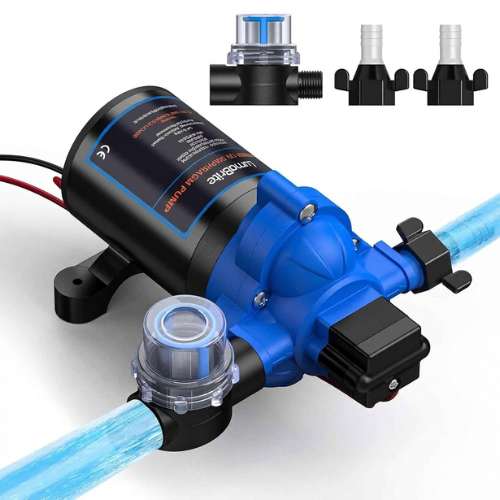
TDRRICH 110V 4GPM 45PSI Water Pressure Booster Pump
110V AC | 4 GPM | 45 PSI | Self-Priming | Diaphragm | Boats, RV, Camper, Irrigation
Check Price on Amazon ↓
Check Price & Buy on Amazon →Which Pump Should You Choose?
The answer depends on how you use your caravan. Here's the definitive guide:
| Scenario | Recommendation |
| Off-grid camping / boondocking | 12V Diaphragm (battery powered) |
| Campsite stays with shore power | 110V TDRRICH Booster |
| Mix of off-grid + campsite | BOTH pumps (switch based on power) |
| Caravan with washing machine | 110V TDRRICH (consistent pressure) |
| Weekend warrior / budget build | 12V Diaphragm only |
| Weak campsite water supply | 110V as inline booster |
| Best overall strategy | Install BOTH (dual-pump system) |
🎯 Our Recommendation: Install BOTH Pumps.
The 12V pump is your primary, always-available pump — works off-grid, while driving, anywhere. The 110V pump activates when you're on shore power for maximum performance and to spare your battery. A simple switch or relay system toggles between them. Total investment: ₹8,000-12,000 for complete water pressure independence in every scenario.
Think of it like this: The 12V is your "survival" pump. The 110V is your "luxury" pump. Together, you never compromise.
Installation Tips — Get It Right the First Time
Even the best pump will underperform if installed incorrectly. Follow these critical installation guidelines:
- Mount the pump with rubber isolators: Even though diaphragm pumps handle vibration well, rubber mounting feet reduce noise transmission to the caravan body by 60-70%. Without isolators, the pump vibration resonates through the floor and walls — amplifying the sound throughout the vehicle.
- Install an accumulator tank: A small 1-2 litre accumulator tank (pressure vessel) between the pump and your plumbing smooths out the last traces of pulsation. It also reduces pump cycling — the pump runs less frequently because the accumulator stores pressurised water for small draws like hand-washing.
- Keep inlet pipe short and straight: The shorter the pipe between tank and pump, the better the self-priming works. Avoid 90° elbows on the inlet side — use 45° bends instead. Every bend adds resistance that reduces suction efficiency.
- Always install the strainer on the inlet: Even if your tank has a filter screen. Redundant filtration saves the pump. Clean the strainer every 2-3 months or after filling from questionable water sources.
- Wire with appropriate gauge: For the 12V pump, use minimum 14 AWG wire for runs under 3 metres, 12 AWG for longer runs. Undersized wiring causes voltage drop → pump runs slower → less pressure → motor overheats. Add an inline fuse (15A for the 12V pump).
- Position pump below the water tank outlet if possible: While self-priming handles above-tank mounting, gravity-assisted flow (pump below tank) reduces strain on the diaphragm and extends pump life significantly.
- Add a bypass/winterization valve: If you travel to cold regions (Ladakh, Himachal in winter), a bypass valve lets you pump antifreeze through the system to prevent frozen pipes. Without this, one freezing night can crack pipes and destroy the pump internals.
🔧 Pro Builder Tip:
Install a 3-way valve AFTER the pump output that directs water to either the hot water heater OR directly to cold taps. This way, cold water bypasses the heater entirely — giving you instant cold water with maximum pressure. The heater only receives water when hot taps are opened. This reduces heater cycling and saves propane/electricity.
Advertisement
Frequently Asked Questions
Can the 12V pump run while driving?
Yes. The 12V diaphragm pump runs directly from your caravan's battery system, which is charged by the vehicle alternator while driving. You can use water (kitchen tap, toilet flush) while the caravan is in motion. The pressure switch handles on/off automatically — no manual intervention needed.
How much battery does the 12V pump use per day?
With the automatic pressure switch, the pump only runs when water is actually flowing. Typical daily usage (2 showers, cooking, hand-washing, toilet): 15-20 minutes of actual pump runtime. At 7 Amps × 12V = 84W, that's approximately 21-28 Wh per day. For a 200Ah lithium battery, that's about 1% of capacity. Negligible.
Do I need both pumps or just one?
If you only camp off-grid (battery only), the 12V pump is sufficient and excellent. If you primarily stay at campsites with shore power, the 110V gives better performance. If you do BOTH (most caravan owners), install both with a switching system. The 12V is always your backup even if the 110V is primary at campsites.
Will the pump work with a rooftop water tank?
The self-priming capability handles water tanks positioned below the pump (suction lift up to 1.5-2 metres). For rooftop tanks ABOVE the pump, it works even better — gravity assists the flow, reducing pump strain and increasing effective pressure at the outlets. Both configurations are fully supported.
How loud is the pump at night?
The 12V diaphragm pump operates at approximately 45dB — equivalent to a quiet conversation or a running refrigerator. With rubber isolators and proper mounting, it's barely audible from the sleeping area. Certainly quieter than the water flowing through pipes. Your family will not be woken by the pump — they'll hear the tap running before they hear the pump.
Can I use the 110V pump with a 230V Indian power supply?
The TDRRICH pump is rated for 110V. In India (230V supply), you'll need a step-down transformer (230V to 110V). These are inexpensive (₹500-1,500) and commonly available. Alternatively, if your caravan's inverter has a 110V output option, use that directly. Some builders install a dedicated 110V circuit for American-spec equipment.
💧 Complete your caravan water system — read our full water system accessories guide
Caravan Water System Complete Guide →Related Articles
- Best Lithium Battery & Charger for Caravan
- Best Solar Panel Kits — 1600W & 2400W
- Best Marine Toilet for Caravan & RV
- Best Portable Gas Stove & Kitchen for Caravan
- Complete Caravan Build — ₹13 Lakh Breakdown
- Caravan Water System — Tank, Pump & Plumbing
Written by Rajiv Sah
Founder, OnRoadCost & Josh Riders | info@onroadcost.com