Caravan House in India 2026 — Price, Legal Rules & Full-Time Living Guide
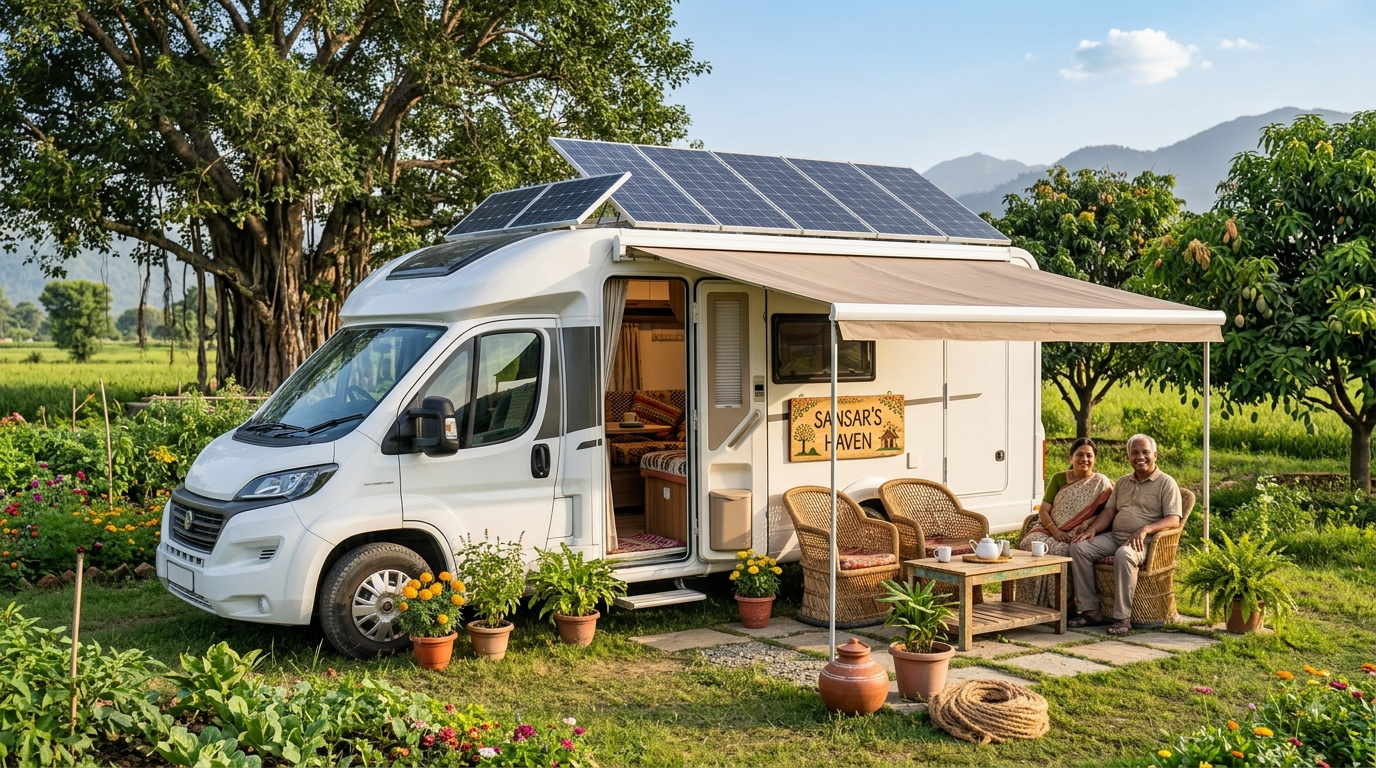
Can you use a caravan as a house in India? Yes — and it costs ₹8-50 lakh depending on size, amenities, and whether you buy new or convert an existing vehicle. A basic stationary caravan house starts at ₹8-12 lakh, a mid-range setup with full bathroom, kitchen, and solar power costs ₹15-25 lakh, and a premium caravan home with AC, washer, and luxury interiors runs ₹30-50 lakh. The concept is gaining traction in India — particularly on farmland, eco-villages, and outskirts of cities where traditional construction is expensive or impractical. But before you commit, there are important legality, address proof, and infrastructure challenges to understand.
⚡ Quick Summary — Caravan House in India 2026:
💰 Price Range: ₹8-50 Lakh (basic to luxury)
⚖️ Legal Status: Legal on own land — issues on public/rented land vary by state
📍 Best Location: Own farmland or registered caravan parks
🏠 Address Proof: Possible via BSNL landline or electricity bill on own land
⚡ Power: Solar + battery (₹2-5 lakh setup) or grid connection on own land
💧 Water: Borewell/tank on own land or municipal connection where available
Advertisement
What is a Caravan House?
A caravan house is a stationary or semi-stationary caravan used as a primary residence instead of a traditional brick-and-mortar home. Unlike a travelling caravan, a caravan house is parked in one location long-term — on farmland, in a caravan park, or on a rented plot. It has all the amenities of a small apartment: kitchen, bathroom, bedroom, living area, power, and water systems.
The key difference from a traditional house: no foundation, no construction permits, and you can move it if needed. This makes it attractive for people who want to live on agricultural land (where construction is restricted), digital nomads wanting flexibility, retirees looking for affordable countryside living, or anyone priced out of urban real estate.
Types of Caravan Houses in India:
• Converted Bus/Truck: Old bus or truck chassis converted into a home (₹8-20L)
• Purpose-Built Motorhome: New build on Force Traveller/Urbania chassis (₹15-35L)
• Towable Caravan: Trailer-type caravan parked permanently on land (₹10-25L)
• Imported Mobile Home: Container-style prefab homes on wheels (₹30-50L)
Caravan House Price Range — India 2026
The cost of a caravan house depends heavily on size, amenities, and whether you're converting or buying new. Here's a complete breakdown:
| Category | Price Range | Size | Amenities | Best For |
|---|---|---|---|---|
| Basic (Converted) | ₹8-12 L | 15-20 sq m | Kitchen, bed, basic power | Singles, couples, weekenders |
| Mid-Range | ₹15-25 L | 20-30 sq m | Full bathroom, solar, AC | Couples, small families |
| Premium | ₹25-35 L | 25-35 sq m | Washer, smart systems, premium | Families, full-time living |
| Luxury/Imported | ₹35-50 L | 30-45 sq m | Hotel-level, everything included | Luxury seekers, content creators |
💡 Cost-Saving Tip: A used bus conversion (₹8-12L) gives you the most space per rupee. A retired KSRTC/MSRTC bus (₹2-4L) + ₹6-8L conversion = a 35 sq m home on wheels for under ₹12L. That's 3x the space of a new caravan at half the price.
Is It Legal to Live in a Caravan in India?
This is the most-asked question about caravan living in India. The answer depends on where you park it:
| Location | Legal Status | Challenges | Recommendation |
|---|---|---|---|
| Own agricultural/farmland | ✅ Legal | No construction rules for vehicles | Best option — full control |
| Own residential plot | ✅ Legal | May need society/neighbor NOC | Good — utility connections easy |
| Rented private land | ⚠️ Gray area | Landlord permission needed, no address proof | Short-term OK, long-term risky |
| Caravan park/eco-village | ✅ Legal | Monthly rent ₹5-15K, limited locations | Great for community living |
| Public land/roadside | ❌ Illegal | Police action, towing, fines | Never — even temporarily |
| Forest/government land | ❌ Illegal | Encroachment charges possible | Avoid completely |
The safest legal option is your own farmland. In India, agricultural land doesn't allow permanent construction in most states, but a vehicle parked on your land is not construction — it's a movable asset. This is the loophole most caravan house dwellers use. States like Goa, Kerala, Himachal Pradesh, and Uttarakhand are most caravan-friendly due to tourism-friendly regulations.
⚠️ Important Legal Notes:
• A caravan on wheels is classified as a "vehicle" not a "structure" — no building permission needed
• If you remove wheels and place it on a foundation, some states may treat it as construction
• Panchayat rules vary — check local bylaws before committing to a plot
• Keep the vehicle registered and road-tax paid — this proves it's a vehicle, not a building
• Some states (Kerala, Goa) are actively developing caravan park policies for permanent parking
Advertisement
Practical Challenges & Solutions
Living full-time in a caravan in India comes with unique challenges. Here's each problem and its proven solution:
| Challenge | Problem | Solution | Cost |
|---|---|---|---|
| Address Proof | Can't get Aadhaar/bank account without address | BSNL landline on your land → generates bill → valid address proof | ₹500/month |
| Electricity | No grid connection to a "vehicle" | Solar + lithium battery (5-10kWh) covers all needs; OR get agricultural connection on your land | ₹2-5 lakh (solar) or ₹5K (connection) |
| Water Supply | No municipal water to farmland | Borewell (if water table OK) or large storage tanks (5000-10000L) with regular tanker delivery | ₹1-3 lakh (borewell) or ₹2K/month (tanker) |
| Waste Management | No sewage connection | Biodigester toilet (no emptying needed) + gray water soakpit/garden irrigation | ₹30-50K (biodigester) |
| Internet | Rural areas have poor connectivity | Jio/Airtel 5G router (urban fringe) or Starlink (rural/remote, ₹5K/month) | ₹500-5,000/month |
| Cooking Gas | LPG refill logistics | Standard LPG connection works everywhere; OR induction + solar for 100% electric cooking | ₹900/cylinder or ₹0 (solar) |
| Security | Isolated farmland locations | CCTV (solar-powered), caretaker arrangement, community living in eco-villages | ₹10-30K (cameras) |
Caravan House vs Traditional House — 5-Year TCO Comparison
Is a caravan house actually cheaper than buying an apartment? Let's compare a ₹20L caravan house vs a ₹40L 2BHK apartment over 5 years:
| Cost Factor | Caravan House (₹20L) | 2BHK Apartment (₹40L) |
|---|---|---|
| Purchase/Down Payment | ₹20,00,000 (full) | ₹8,00,000 (20% down) |
| EMI (5 years) | ₹0 | ₹32,00,000 × 5yr @ 8.5% |
| Total Interest Paid | ₹0 | ₹6,40,000 |
| Land/Plot Cost | ₹5-15,00,000 (farmland) | Included in apartment |
| Maintenance (5 years) | ₹2,50,000 | ₹3,00,000 (society charges) |
| Property Tax (5 years) | ₹0 (vehicle, not property) | ₹1,50,000 |
| Electricity (5 years) | ₹50,000 (mostly solar) | ₹3,00,000 |
| Insurance (5 years) | ₹1,50,000 | ₹50,000 |
| 5-Year Total Cost | ₹30-45 lakh | ₹54-55 lakh |
* Caravan house assumes ₹10L for farmland near a tier-2 city. Apartment cost includes EMI interest. Both assume no resale/appreciation.
📊 Key Insight: A caravan house saves ₹10-25 lakh over 5 years compared to an apartment — BUT it doesn't appreciate in value like real estate. If you're looking at it purely as a home (not investment), the caravan house wins financially. If you want asset appreciation, real estate still beats mobile living.
Where to Park Your Caravan House in India
🏡 Own Farmland (Best Option)
Buy agricultural land near a tier-2 city (₹5-15L for 1000-2000 sq m). Park your caravan, set up solar and borewell. No permission needed, full privacy, can grow food around it. States with affordable farmland: Maharashtra (Konkan), Karnataka (Coorg fringe), Tamil Nadu (Nilgiris), Himachal, Uttarakhand.
🏕️ Caravan Parks & Eco-Villages
A growing number of eco-villages and caravan parks offer long-term parking with shared amenities (power hookup, water, WiFi, community kitchen). Monthly rent: ₹5,000-15,000. Locations: Goa (Arambol, Palolem fringe), Kerala (Wayanad), Himachal (Bir, Manali fringe), Uttarakhand (Rishikesh area). Great for community living.
📋 Rented Private Plots
Rent an empty plot from a landowner (₹3,000-10,000/month) and park your caravan there. This works short-term but getting address proof is difficult. Best for people testing caravan living before buying land. Ensure written agreement and landowner NOC for any utility connections.
Essential Equipment for Caravan House Living
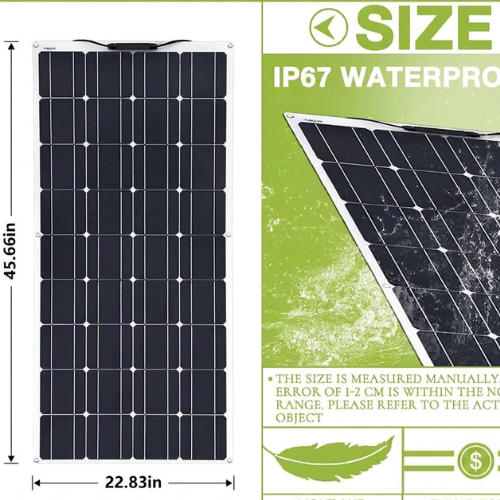
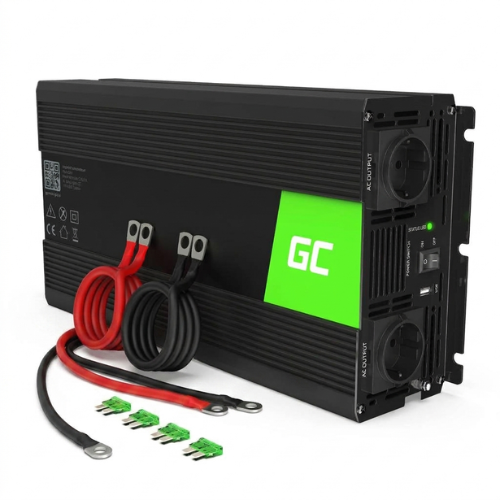
Setting up a caravan house for full-time living requires reliable power and cooling systems. These are the most critical components:

* Affiliate links — we earn a small commission at no extra cost to you. These are products we genuinely recommend based on caravan builds.
Advertisement
Who's Already Living in Caravans in India?
Caravan living isn't just theory — several Indians are already doing it full-time. Here are real examples from the community:
🚐 The Wandering Souls (Goa) — A couple from Pune who converted a Force Traveller into their full-time home in 2023. Parked on rented farmland near Palolem. Total investment: ₹22L (vehicle + conversion). They run a YouTube channel and freelance remotely. Solar-powered, borewell water, Starlink internet.
🏡 Countryside Caravan Park (Coorg, Karnataka) — A retired IT couple built a caravan park on their 2-acre coffee estate. They live in one caravan and rent out 3 others to long-term residents. Monthly rent: ₹8,000-12,000 including power and water hookup. Community of 5 families now.
🌿 Eco-Van Village (Bir, Himachal) — A community of 8 vanlifers who pooled resources to lease 1 acre near Bir. Each has their own converted vehicle (₹10-25L range). Shared solar farm (10kW), borewell, composting toilet system. Total setup cost per person: ₹15-20L including land share.
🚌 The Bus Home Family (Wayanad, Kerala) — A family of 4 (including 2 kids) living in a converted old KSRTC bus since 2024. Parked on their own farmland (₹8L for half-acre). Kids attend a nearby school. Total home cost: ₹14L (bus ₹3L + conversion ₹11L). They grow 60% of their vegetables around the bus.
Related Caravan Guides
Ready to buy a caravan for full-time living? Calculate the complete on-road cost.
Calculate On-Road CostEssential Caravan Equipment — Complete Your Setup
Whether buying or building, these 3 components make the biggest difference in your caravan experience:
Frequently Asked Questions
Is it legal to live in a caravan full-time in India?
Yes, it's legal to live in a caravan in India if parked on your own land (agricultural or residential). A caravan with wheels is classified as a vehicle, not a structure, so no building permission is needed. On public land or unauthorized locations, you can face police action. Best option: own farmland or registered caravan parks.
How do I get address proof for a caravan house?
The most reliable method: get a BSNL landline connection on your land (requires land ownership document). The phone bill serves as valid address proof for Aadhaar, bank accounts, and PAN card. Alternative: get an electricity connection on agricultural land — the bill works as address proof. Some banks also accept rent agreements + landlord NOC.
How do you get electricity in a caravan house?
Three options: (1) Solar + lithium battery system — most common for caravan houses. A 1.5kW solar + 5kWh battery setup costs ₹2-3 lakh and handles lights, fridge, fans, laptop, and TV. (2) Agricultural electricity connection on own land — ₹5,000 to setup, ₹2-3/unit. (3) Diesel generator as backup — ₹30-50K. Most caravan house dwellers use solar as primary + grid/generator as backup.
What about water supply for caravan house living?
On own land: borewell (₹1-3 lakh depending on depth, works if water table is accessible) or large storage tanks (5000-10000L) with regular tanker delivery (₹1,500-2,500 per tanker). In caravan parks: shared water supply included in rent. Rainwater harvesting can supplement in monsoon months. A family of 4 needs ~500-800 liters/day for comfortable living.
Do I need to pay property tax on a caravan house?
No. A caravan on wheels is a registered vehicle, not a building — it's not subject to property tax or house tax. You pay road tax and vehicle insurance like any vehicle. However, the land you park on (if owned) may have land revenue/property tax obligations. This is one of the biggest financial advantages of caravan house living vs traditional homes.
Advertisement
Written by Rajiv Sah
Founder, OnRoadCost & Josh Riders | Automotive journalist with 8+ years covering Indian vehicle market | info@onroadcost.com