Caravan Solar Panel Setup — 550W to 880W Price, Installation & Best Brands India (2026)

Advertisement
Solar panels on your caravan roof are the difference between a weekend warrior and a true full-time traveller. With India getting 4-6 peak sun hours daily across most of the country, a properly sized solar system can keep your batteries charged indefinitely — no generator noise, no fuel cost, no dependency on campsite hookups. Free, silent energy from the sun.
In this guide, we cover everything about setting up a 550W to 880W caravan solar system in India: exact costs, best brands, flexible vs rigid panel comparison, MPPT controllers, installation tips, and common mistakes to avoid.
Why Solar for Your Caravan?
A caravan without solar is like a phone without a charger — you're constantly looking for the next power source. Here's why solar is essential for Indian caravans:
Free Energy: After initial investment, solar generates electricity for 20+ years with zero running cost. No diesel, no electricity bills.
Silent Operation: Unlike generators that produce 60-70dB noise, solar panels are completely silent. Camp in peace.
Extend Off-Grid Time: Without solar, a 10kW battery lasts 2-3 days. With solar, you can stay off-grid indefinitely as long as there's sunlight.
Low Maintenance: No moving parts, no oil changes, no breakdowns. Just occasional cleaning.
India's Solar Advantage: India receives 4-6 peak sun hours daily, making it one of the best countries in the world for solar energy. Even in monsoon, you get 2-3 hours.
Advertisement
550W vs 880W — Which to Choose?
The right solar capacity depends on your battery size, daily consumption, and budget:
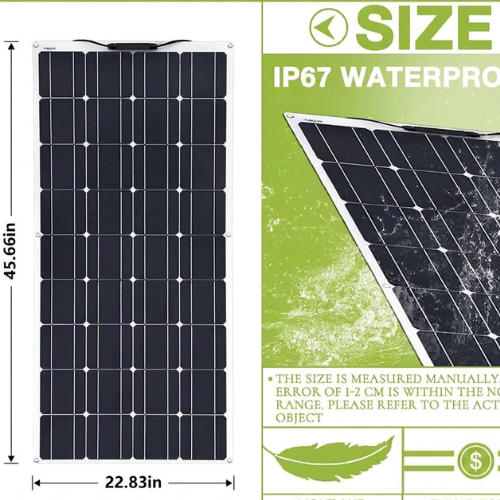
550W (4 × 140W panels): Ideal for 5kWh battery systems or caravans with moderate use (LED lights, fridge, charging, water pump). Generates 2.2-3.3 kWh/day in India. Perfect for weekend camping and occasional week-long trips. Fits easily on most caravan roofs.
880W (6 × 140W panels): Recommended for 10kWh systems or full-time travellers who use induction cooking, microwave, and laptop work. Generates 3.5-5.3 kWh/day. Requires a larger roof area (about 6-7 sqm) but provides energy abundance even on cloudy days.
Our Recommendation: If you have the roof space and budget, always go 880W. The marginal cost increase (₹12,000-16,000 more) is small compared to the daily energy benefit. Having excess solar capacity means your batteries stay fuller longer, extending their lifespan.
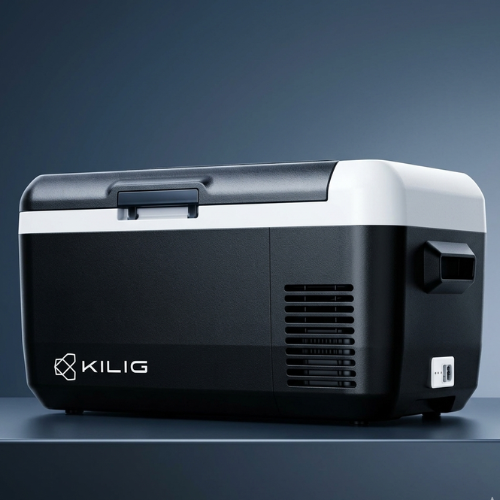
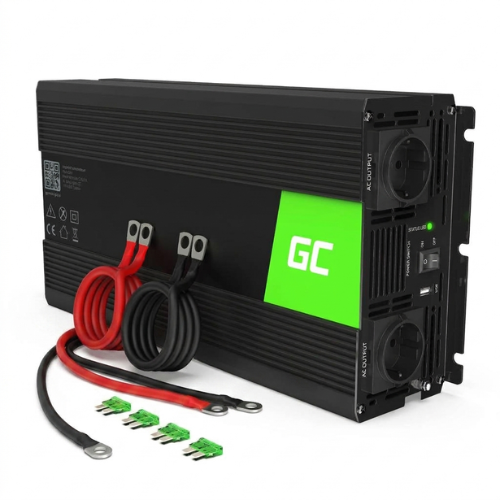
Essential Caravan Equipment — Must Have
Critical components for any caravan build or upgrade:
Complete Solar System Price Table
| Flexible Solar Panels 140W × 4 (560W) | ₹24,000 - ₹32,000 |
| Flexible Solar Panels 140W × 6 (840W) | ₹36,000 - ₹48,000 |
| MPPT Charge Controller 40A | ₹8,000 - ₹12,000 |
| MC4 Connectors & Solar Cable (10m) | ₹2,000 - ₹3,000 |
| Mounting Adhesive/Brackets | ₹3,000 - ₹5,000 |
| Junction Box | ₹1,000 - ₹2,000 |
| Installation Labour | ₹5,000 - ₹8,000 |
| TOTAL (550W Setup) | ₹43,000 - ₹62,000 |
| TOTAL (880W Setup) | ₹55,000 - ₹78,000 |
Flexible vs Rigid Panels for Caravans
This is one of the most debated topics in the caravan community. For Indian caravans, flexible panels win hands down. Here's why:
Weight: A 140W flexible panel weighs 2.5-3kg. A rigid panel of the same wattage weighs 10-12kg. With 4-6 panels, that's a 30-50kg difference on your roof — affecting centre of gravity and fuel efficiency.
Aerodynamics: Flexible panels sit flush against the roof (3-5mm thick). Rigid panels need mounting brackets, creating a 5-10cm gap that catches wind at highway speeds, increasing fuel consumption and noise.
Roof Curve: Most caravan roofs have a slight curve for water drainage. Flexible panels follow this curve perfectly. Rigid panels need flat mounting, often requiring a sub-frame.
Installation: Flexible panels can be adhered directly with Sikaflex or VHB tape — no drilling holes in your roof (which can cause leaks). Rigid panels need bolt-through mounting.
The Trade-off: Rigid panels are slightly more efficient (20-22% vs 18-20% for flexible) and last longer (25 years vs 15-20 years). But for a caravan where weight, aerodynamics, and installation simplicity matter more, flexible is the clear winner.
Best Solar Panel Brands in India
Loom Solar: India's best option for flexible solar panels. They manufacture flexible panels specifically designed for RVs and caravans. Available direct from their website with pan-India delivery. Price: ₹6,000-8,000 per 140W flexible panel.
Waaree: India's largest solar panel manufacturer. Primarily makes rigid panels but their quality is unmatched. Great if you prefer rigid mounting. Price: ₹4,500-6,000 per 150W rigid panel.
Tata Power Solar: Premium brand with excellent warranty support. Rigid panels suitable for larger caravan builds with flat roof sections. Price: ₹5,000-7,000 per 150W rigid panel.
Vikram Solar: Another reputable Indian manufacturer with good after-sales network. Competitive pricing for rigid panels.
Chinese Imports (via Amazon/AliExpress): Brands like DOKIO, Renogy, and BougeRV offer flexible panels at ₹4,000-6,000 per 100-140W. Quality varies — read reviews carefully. No local warranty support.
Daily Solar Generation in India
India's solar irradiance varies by region and season, but here's what you can realistically expect:
| North India (Delhi, Jaipur) — Summer | 5-6 peak sun hours |
| North India — Winter | 4-5 peak sun hours |
| South India (Bangalore, Chennai) | 4.5-5.5 peak sun hours |
| West India (Rajasthan, Gujarat) | 5.5-6.5 peak sun hours |
| East/North-East India | 3.5-4.5 peak sun hours |
| Monsoon Season (anywhere) | 2-3 peak sun hours |
550W System Daily Generation: 2.2 kWh (monsoon) to 3.6 kWh (Rajasthan summer)
880W System Daily Generation: 3.5 kWh (monsoon) to 5.7 kWh (Rajasthan summer)
Note: These account for real-world efficiency losses (heat, angle, dust, inverter losses) — typically 75-80% of theoretical maximum.
Essential Caravan Equipment — Complete Your Setup
Whether buying or renting, these 3 components make the biggest difference in your caravan experience:
Installation Tips
Orientation: In India (Northern Hemisphere), panels should face south for maximum generation. On a caravan roof, panels lie flat — orientation matters less since you're moving and the sun angle changes. Flat mounting is fine.
Series vs Parallel: For a 24V battery system with an MPPT controller, wire panels in series (adds voltage). This allows thinner cables and less power loss. A 4-panel series string gives ~80V open-circuit voltage — well within most 150V-rated MPPT controllers.
Cable Entry: Use a waterproof roof cable entry gland (₹200-500). Never just drill a hole and silicone it — it will leak eventually. The gland creates a proper seal that handles thermal expansion.
Cleaning Access: Consider how you'll clean panels. Dust reduces output by 10-25% in India. Mount panels where you can reach them with a long-handle soft brush. Some builders install a rooftop walk-way strip for access.
MPPT vs PWM: Always use MPPT (Maximum Power Point Tracking) controller, never PWM. MPPT extracts 20-30% more power from the same panels by optimizing voltage conversion. The ₹5,000-8,000 premium over PWM pays for itself within months.
Common Mistakes to Avoid
1. Undersizing the controller: A 40A MPPT controller handles up to ~1000W on 24V systems. If you plan to expand later, buy a 60A controller upfront — it costs only ₹3,000-5,000 more.
2. Using household electrical wire: Solar cables need to be UV-resistant, double-insulated, and rated for DC. Regular PVC wire degrades in sunlight within a year. Use proper DC solar cable (4mm² or 6mm²).
3. No fuse between panels and controller: A DC fuse or breaker between your panel array and the charge controller is essential for safety. It allows you to isolate the panels for maintenance.
4. Ignoring shading: Even partial shading on one panel (from an AC unit, antenna, or roof rack) can reduce the entire string's output by 50-70%. Plan your roof layout carefully to avoid shadows.
5. Cheap MC4 connectors: Counterfeit MC4 connectors with poor weather sealing are common on Amazon. Buy from reputed solar shops. A ₹50 connector failure can damage your entire system.
Frequently Asked Questions
Q: Can solar panels power my caravan AC?
Not directly in real-time (a 1-ton AC needs 1200W, more than most roof solar produces). But solar charges your battery during the day, and you run AC from the battery. With 880W solar generating 4-5 kWh/day, you can effectively run AC for 3-4 hours daily from solar energy alone.
Q: Do flexible panels work in Indian heat?
Yes, but with reduced efficiency. All solar panels lose about 0.4% efficiency per degree above 25°C. In Indian summers (45°C+), this means 8-10% output reduction. Flexible panels can run slightly hotter since they don't have the airflow gap that raised rigid panels have. The convenience trade-off is still worth it.
Q: How often should I clean caravan solar panels?
In dusty Indian conditions, clean every 1-2 weeks for optimal performance. A quick wipe with a damp microfiber cloth or soft brush is enough. During monsoon, rain does the cleaning for you. Never use abrasive materials that can scratch the panel surface.
Q: Can I add more panels later?
Yes! If you buy a controller rated for more wattage (e.g., 60A for up to 1500W on 24V), you can add panels later. Just ensure your roof has space and your wiring can handle the extra current. It's cheaper to oversize the controller now than replace it later.
Q: What happens on cloudy/rainy days?
Solar panels still generate power on cloudy days — about 10-25% of their rated capacity. A 880W system still gives 0.9-2.2 kWh on a fully cloudy day. Combined with a 10kW battery, you have 3-5 days of autonomy without any sun. For monsoon travel, consider carrying a small 2.8kVA generator as backup.
Q: Is it worth importing panels from China directly?
For individual buyers, not really. Import duties (25-40% BCD on solar panels), shipping costs, and customs hassle make it expensive. Indian brands like Loom Solar offer competitive pricing with local warranty. Only worth importing if buying 10+ panels for multiple builds.
Need a battery system to store all that solar energy? Read our 10kW lithium battery guide
Caravan Battery System Guide →Need Help With Your Caravan Build?
For professional caravan builds with optimized solar systems, contact Pro Camper India: procamperindia@gmail.com
Related Articles
🔋 Caravan Battery System — 10kW Lithium Setup Guide
☀️ Caravan Solar Panel Setup — 550W to 880W Guide
🚿 Caravan Water System — Tank, Pump & Plumbing
🍳 Caravan Kitchen — DC Fridge, Induction & Microwave
🚽 Caravan Bathroom — Marine Toilet & Shower
📋 Complete Caravan Build — ₹13 Lakh Breakdown
Rajiv Sah
Automotive & caravan enthusiast covering on-road costs, accessories, and build guides for Indian travellers. Researching caravan builds since 2024.
Advertisement